What Is an Oblong Face Shape?
Before you can confirm your face shape, it helps to know exactly what to look for. Here are the three defining traits that set an oblong face apart from the rest.
Oblong Face Shape at a Glance
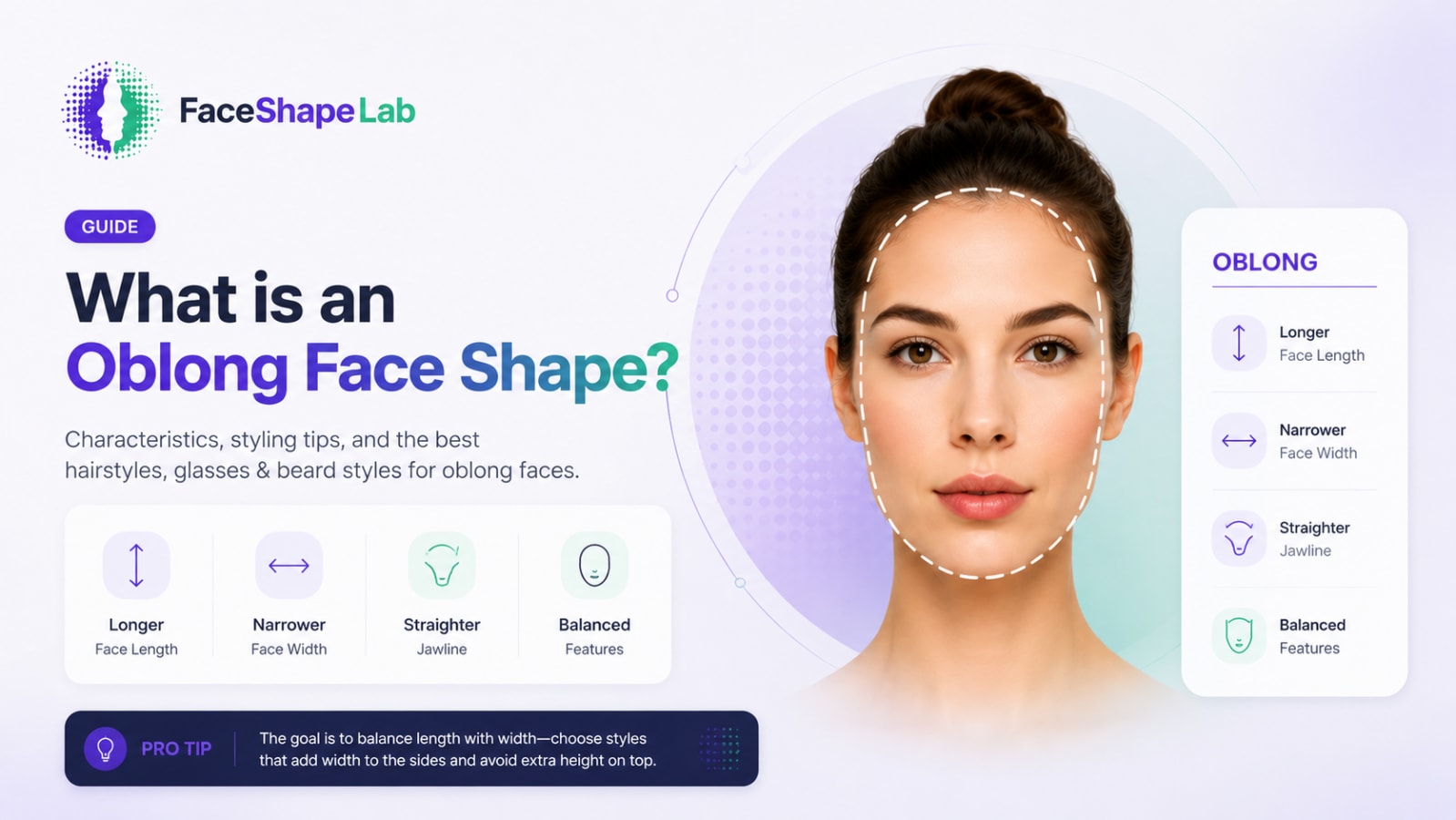
An oblong face shape is one where your face is noticeably longer than it is wide, with your forehead, cheekbones, and jawline all measuring roughly the same width. The sides of the face run in relatively straight, parallel lines rather than curving inward, and the chin tends to be flat or softly squared rather than pointed. If your face looks "stretched" rather than gently tapered, you're likely looking at an oblong shape.
Key Characteristics of an Oblong Face
If your face has always looked "longer" than your friends' in photos, you might have an oblong face shape. Here's exactly what defines it, how it differs from oval, and how to style it to your advantage.
Face Length vs. Width
The defining trait of an oblong face is a length that significantly exceeds its width commonly cited as a length-to-width ratio of around 1.5:1 or higher. In simple terms, if you measured from your hairline to your chin and then across your face at its widest point, the first number would be noticeably larger than the second.
Forehead, Cheekbone, and Jaw Width
Unlike shapes such as diamond or heart, where one area is clearly the widest, an oblong face keeps the forehead, cheekbones, and jawline at fairly consistent widths all the way down. There's no single dramatic "widest point" the sides simply run straight from top to bottom.
Jawline and Chin Shape
The jawline on an oblong face tends to be straight rather than curved, and the chin is usually flat, squared, or only gently rounded. This is part of what gives the face its elongated, rectangular impression rather than the soft taper you'd see on an oval face.
Oblong vs. Oval Face Shape: What's the Difference?
Oblong is one of the most commonly confused face shapes, mainly because both oblong and oval faces are longer than they are wide. The difference comes down to two things: the cheek line and the overall ratio. Oval faces have gently curved sides that taper inward toward a softly rounded chin, with a length-to-width ratio that's only moderately elongated. Oblong faces, on the other hand, have straighter, flatter sides with little to no taper, and the length-to-width ratio is more pronounced. If you trace the outline of your face and see a soft curve from cheekbone to chin, you're likely oval. If you see relatively straight, parallel lines all the way down, you're likely oblong.
How to Tell If You Have an Oblong Face Shape
The quickest way to confirm an oblong face shape is to measure your face length (hairline to chin) and your face width (across the cheekbones), then compare the two. If your length is noticeably greater than your width with similar forehead, cheekbone, and jaw measurements throughout you're likely working with an oblong shape. For the full step-by-step measuring method, photo tips, and a breakdown of all seven face shapes, check out our complete guide on how to determine your face shape.
Best Hairstyles for an Oblong Face
The general goal for an oblong face is to add width and avoid extra height or length. Horizontal volume and texture are your best tools here.
Hairstyles for Women
Shoulder-length cuts with waves or curls work well, since the added volume at cheek and jaw level breaks up the vertical line of the face. A full, blunt fringe or side-swept bangs also help by creating a horizontal line that visually shortens the upper face. Avoid long, straight, center-parted styles, since they tend to emphasize length rather than balance it.
Hairstyles for Men
Textured crops, French crops, and side-swept styles with volume on the sides all add width without increasing height. Keeping the top relatively short (rather than tall) and favoring low or mid fades over high fades helps preserve side volume, which is exactly what an oblong face benefits from.
Best Glasses for an Oblong Face Shape
Frames that are wider than they are tall help counterbalance the natural length of an oblong face. Round or oval frames, browline (clubmaster-style) glasses, and wide rectangular frames all tend to work well. Avoid narrow, small, or overly tall frames, since they can make the face look even longer.
Best Beard Styles for an Oblong Face
Beards that add horizontal width at the jaw like a short boxed beard or a fuller beard with extra width on the sides help balance an oblong face nicely. Long, pointed goatees or narrow chin straps tend to do the opposite, adding even more visual length to an already elongated face.
Makeup and Contouring Tips for an Oblong Face
Apply blush horizontally across the cheeks toward the temples to add the appearance of width. Contouring the hairline and chin lightly can help shorten the apparent length of the face, while a bold, horizontally-emphasized brow draws the eye sideways rather than down. Avoid heavy contour lines running down the sides of the nose, since vertical contouring only adds to the face's length.
Hairstyles and Looks to Avoid
A few styling choices tend to work against an oblong face shape rather than for it:
Long, straight hair with no layers or volume, which exaggerates length
High, voluminous styles on top (think tall pompadours or top knots), which add even more height
Center parts paired with flat, sleek hair, which create a long vertical line down the middle of the face
Narrow or tall glasses frames, which emphasize the face's length rather than balancing it
Final Thoughts
An oblong face shape is defined by length more than anything else a face that's noticeably longer than it is wide, with consistent width from forehead to jaw and relatively straight sides. Once you can tell it apart from an oval (the shape it's most often mistaken for), styling becomes much more straightforward: focus on horizontal volume, and avoid anything that adds extra height or length. If you're not fully sure which shape you have, run your photo through Face Shape Lab to confirm before committing to a new look.
FAQs
Is oblong the same as rectangle face shape?
They're very closely related and often used interchangeably. Both describe a face that's noticeably longer than wide with similar forehead, cheek, and jaw widths some sources simply use "rectangle" to emphasize a slightly more angular jawline compared to "oblong."
What causes an oblong face shape?
Face shape is primarily determined by underlying bone structure, which is largely genetic. Things like weight changes or aging can subtly affect how pronounced the shape appears, but the basic proportions stay fairly consistent throughout adulthood.
Can an oblong face shape change over time?
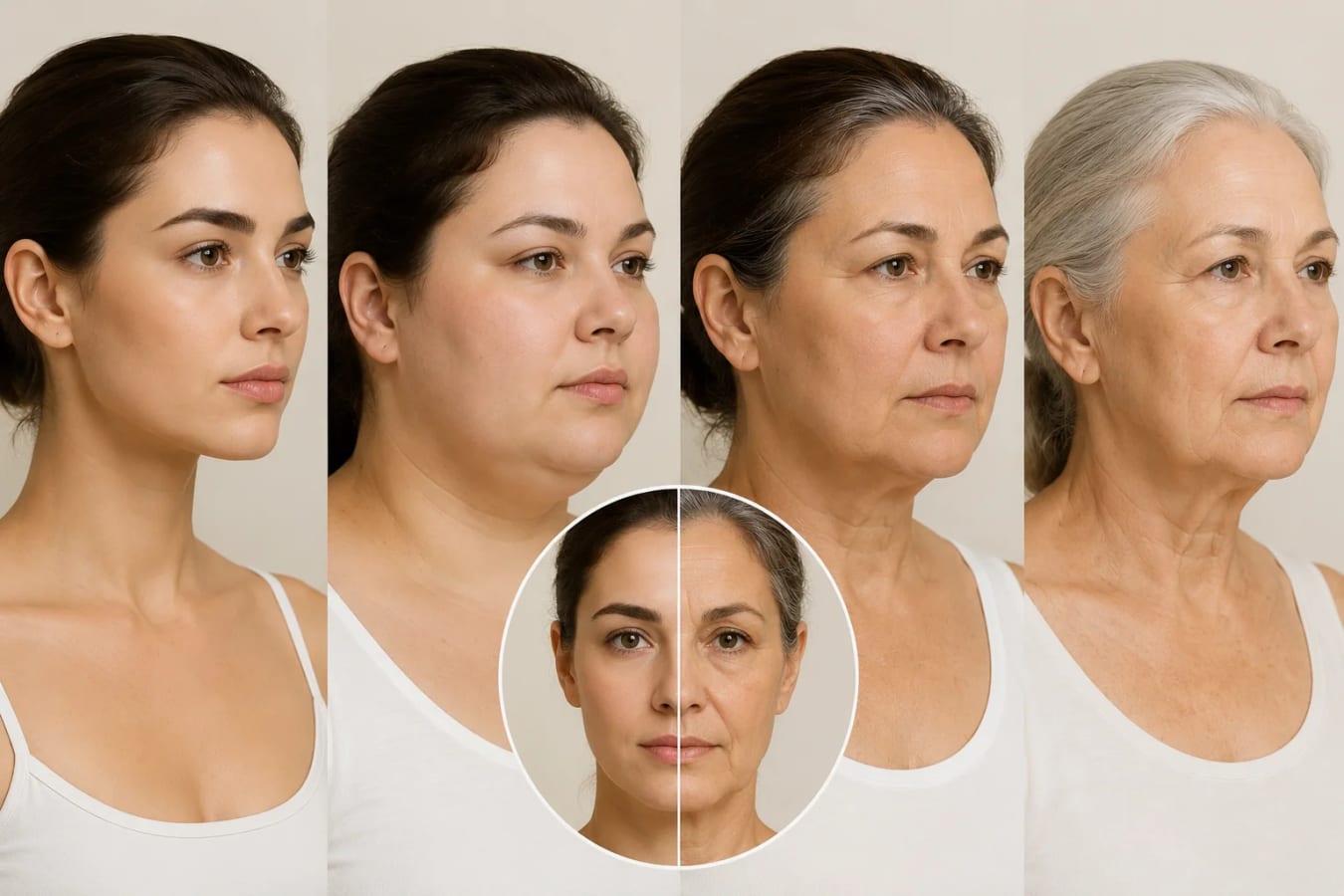
Your bone structure itself doesn't change much, but factors like weight loss, muscle tone, or aging can make an oblong face appear more or less elongated. The underlying shape, however, typically stays the same.
What is the rarest face shape?
This varies by source and methodology, since there's no single standardized study most experts agree on. Some sources rank diamond as the rarest, while others rank oblong as less common than round or oval but more common than heart or diamond. Treat any specific rarity percentage as an estimate rather than an established fact.
Do oblong faces suit short hair?
Yes, as long as the style adds width rather than height. Textured crops, side-swept short cuts, and styles with volume at the sides tend to work well, while very short, close-cropped styles with no width can sometimes emphasize the face's length.