Does Your Face Shape Change With Age or Weight Loss?
Your face can look noticeably different as you get older or lose and gain weight. Changes in facial fat, skin elasticity, muscle tone, and overall facial proportions can affect how your face appears. However, these changes do not necessarily mean that your underlying bone structure has completely changed. Understanding the difference between your natural facial structure and changes in soft tissue can help explain why your face may look different over time.
Does Your Face Shape Actually Change With Age?
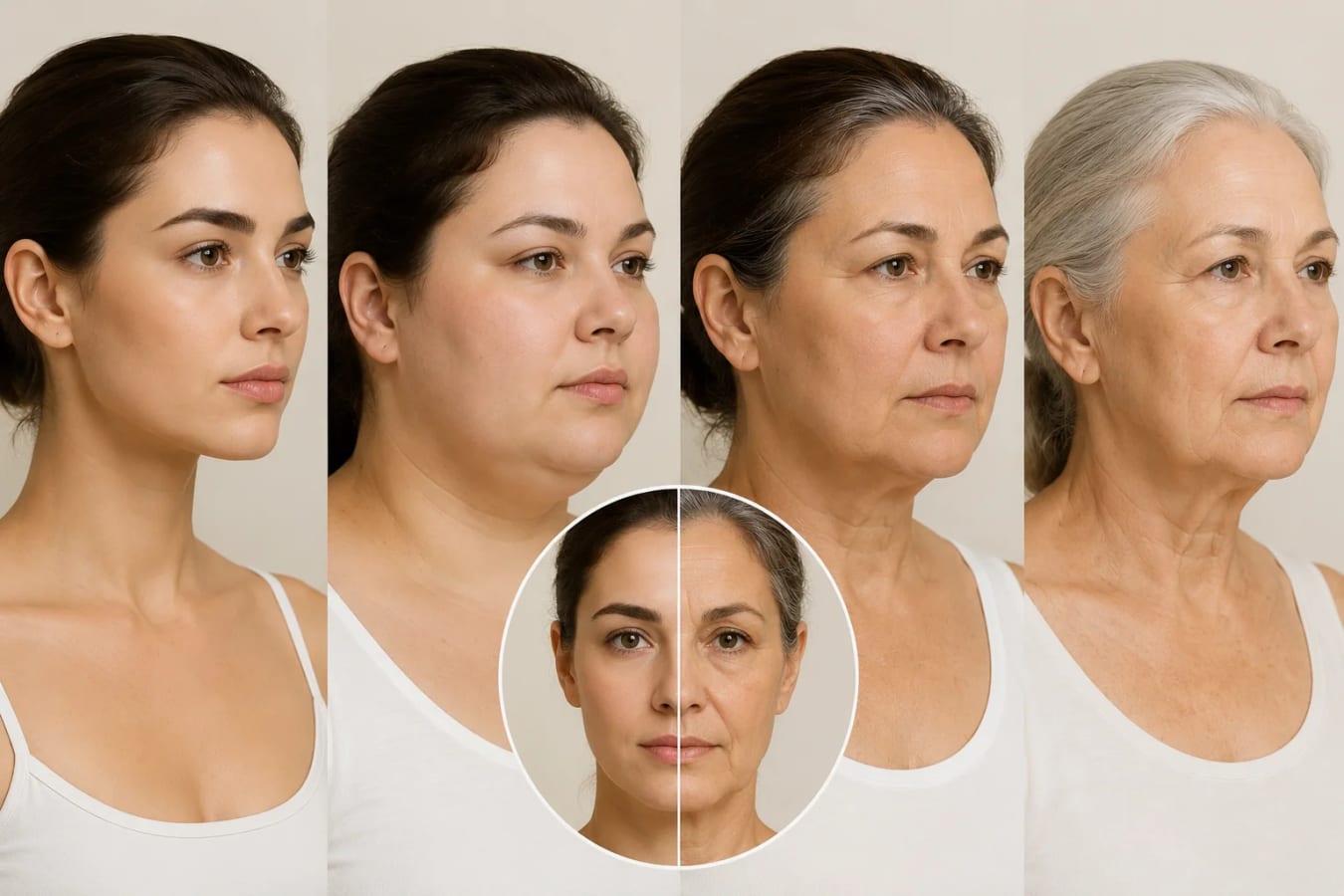
Your basic face shape is largely determined by your bone structure and genetics, which generally remain relatively stable throughout adulthood. However, the appearance of your face can change as you age due to changes in skin, fat distribution, and muscle mass. For example, facial volume may decrease in some areas while gravity causes other tissues to shift downward. As a result, a face that once looked fuller or more rounded may appear longer, narrower, or more defined over time.
How Aging Can Change the Appearance of Your Face
Aging can affect several features that contribute to the overall appearance of your face. Skin gradually loses collagen and elasticity, while facial fat can decrease or move to different areas. These changes may make the cheeks look less full, the jawline less defined, or the lower face appear longer. Although your underlying bone structure remains mostly the same, these soft-tissue changes can make your face shape appear noticeably different.
How Weight Loss Can Change Your Face Shape
Weight loss can significantly affect the amount of fat stored around your cheeks, jaw, chin, and other areas of the face. When facial fat decreases, your cheekbones and jawline may become more visible, making your face appear slimmer or more defined. The amount of change varies from person to person because genetics determine where your body tends to store and lose fat. This means weight loss can change the appearance of your face shape without changing the underlying structure of your facial bones.
Can Weight Gain Change Your Face Shape?
Weight gain can also change how your face shape appears by increasing the amount of soft tissue around areas such as the cheeks, chin, and jawline. A previously defined face may look fuller or rounder as facial fat increases. However, gaining weight does not normally change the basic shape of your facial bones. The visible effect depends on factors such as genetics, age, and where your body naturally stores fat.
Does Facial Fat Affect Your Face Shape?
Facial fat plays an important role in how your face shape appears. Fat stored around the cheeks, jawline, chin, and temples can make the face look fuller, softer, or rounder. When facial fat decreases, features such as the cheekbones and jawline may become more visible and defined. Because fat distribution varies from person to person, the effect of weight changes on face shape can be different for everyone.
How Aging and Weight Loss Affect Different Face Shapes
Aging and weight loss can affect each face shape differently because people naturally store facial fat in different areas. A round face may appear slimmer as cheek fat decreases, while an oval or oblong face may look more defined or slightly longer. Square and diamond-shaped faces may show more prominent cheekbones or jawlines after weight loss. Over time, aging can further change these appearances through changes in skin elasticity, facial volume, and tissue distribution.
Can Your Face Shape Change From Oval to Round or Vice Versa?
Your underlying facial bone structure usually does not change from oval to round or from round to oval during normal adulthood. However, changes in facial fat, muscle, skin, and aging can make your face appear closer to another shape. For example, weight gain may make an oval face appear fuller and rounder, while weight loss can reveal more definition. This is why your perceived face shape may change even though your basic bone structure remains largely the same.
How Genetics Influence Changes in Your Face Shape
Genetics have a major influence on your natural face shape, bone structure, facial fat distribution, and how your face changes over time. Some people naturally retain more fullness in their cheeks, while others tend to lose facial volume more quickly with age or weight loss. Genetics can also influence skin elasticity and where fat is stored throughout the body. As a result, two people with similar weight changes can experience very different changes in their facial appearance.
Does Your Face Shape Change After Your 20s, 30s, 40s, or 50s?
Your face can gradually change in appearance throughout adulthood, although the changes tend to happen over time rather than suddenly at a specific age. In your 20s and 30s, facial features may remain relatively stable, while changes in collagen, skin elasticity, and facial volume often become more noticeable later. During your 40s and 50s, changes in fat distribution and skin structure can make the face appear less full or more elongated. Individual genetics, lifestyle, and changes in body weight all influence how these changes develop.
How to Tell If Your Face Shape Has Actually Changed
To determine whether your face shape has really changed, compare photos taken at different ages or body weights under similar conditions. Look at consistent features such as the width of your forehead, cheekbones, jawline, and overall face length. Changes in facial fat, hairstyle, facial hair, lighting, and camera angles can make your face appear different even when its basic structure has stayed the same. Comparing clear, front-facing photos can help you identify whether the change is structural or simply an appearance change.
How to Find Your Face Shape at Different Ages or Weights
The easiest way to compare your face shape at different ages or weights is to use clear photos taken from a straight-on angle. Try to keep the lighting, camera distance, facial expression, and head position as consistent as possible. You can also compare measurements such as face length, forehead width, cheekbone width, and jawline width. For a quicker analysis, you can use an AI face shape detector to analyze your current facial proportions from a photo.
Can AI Detect Changes in Your Face Shape?
AI face analysis can help identify your current face shape by examining facial landmarks and proportions visible in a photo. If you analyze photos taken at different ages or weights under similar conditions, the results can help you understand how your facial appearance has changed. However, AI results can be influenced by lighting, camera angle, facial expression, and image quality. For the most useful comparison, always use clear and consistently taken photos.
How to Take an Accurate Photo for Face Shape Analysis
For more accurate face shape analysis, take a clear front-facing photo with your head straight and your face fully visible. Use even lighting and avoid extreme shadows, filters, heavy makeup, or accessories that cover your facial features. Keep the camera at approximately eye level and avoid using extreme wide-angle selfies. A consistent photo setup makes it easier for an AI face shape detector to analyze your facial proportions accurately.
Conclusion
Your basic face shape is largely determined by your genetics and underlying bone structure, but its appearance can change with age, weight loss, weight gain, and changes in facial fat. These changes can make your face look slimmer, fuller, longer, or more defined without necessarily changing the underlying structure. If you're curious about your current face shape, Face Shape Lab can help you analyze your facial proportions using AI. Comparing results from clear photos over time can also help you understand how your facial appearance evolves.
Frequently Asked Questions
Can your face shape change as you get older?
Your basic bone structure usually remains stable, but aging can change the appearance of your face. Changes in facial fat, skin elasticity, and tissue distribution can make your face look longer, slimmer, or less defined.
Does losing weight change your face shape?
Weight loss can make your face appear slimmer and more defined as facial fat decreases. Your cheekbones and jawline may become more noticeable, but your underlying facial bone structure generally does not change.
Can gaining weight make your face look rounder?
Yes. Weight gain can increase facial fat around the cheeks, jaw, and chin, which may make the face appear fuller or rounder. The effect varies depending on genetics and where your body naturally stores fat.
Can your face shape change from oval to round?
Your underlying bone structure normally does not change from oval to round. However, changes in facial fat, aging, and weight can alter your proportions enough to make your face appear closer to a different shape.
Can AI detect changes in your face shape?
AI can analyze facial landmarks and proportions in photos to identify your current face shape. Comparing clear photos taken under similar conditions can help you understand how your facial appearance has changed over time.