Best Eyeliner and Eyeshadow Techniques for Your Eye Shape
The same winged liner that looks stunning on one person can make another look tired. It's not a skill problem, it's an eye shape problem. Here's how to choose eyeliner and eyeshadow techniques that actually flatter almond, round, hooded, monolid, downturned, and upturned eyes.
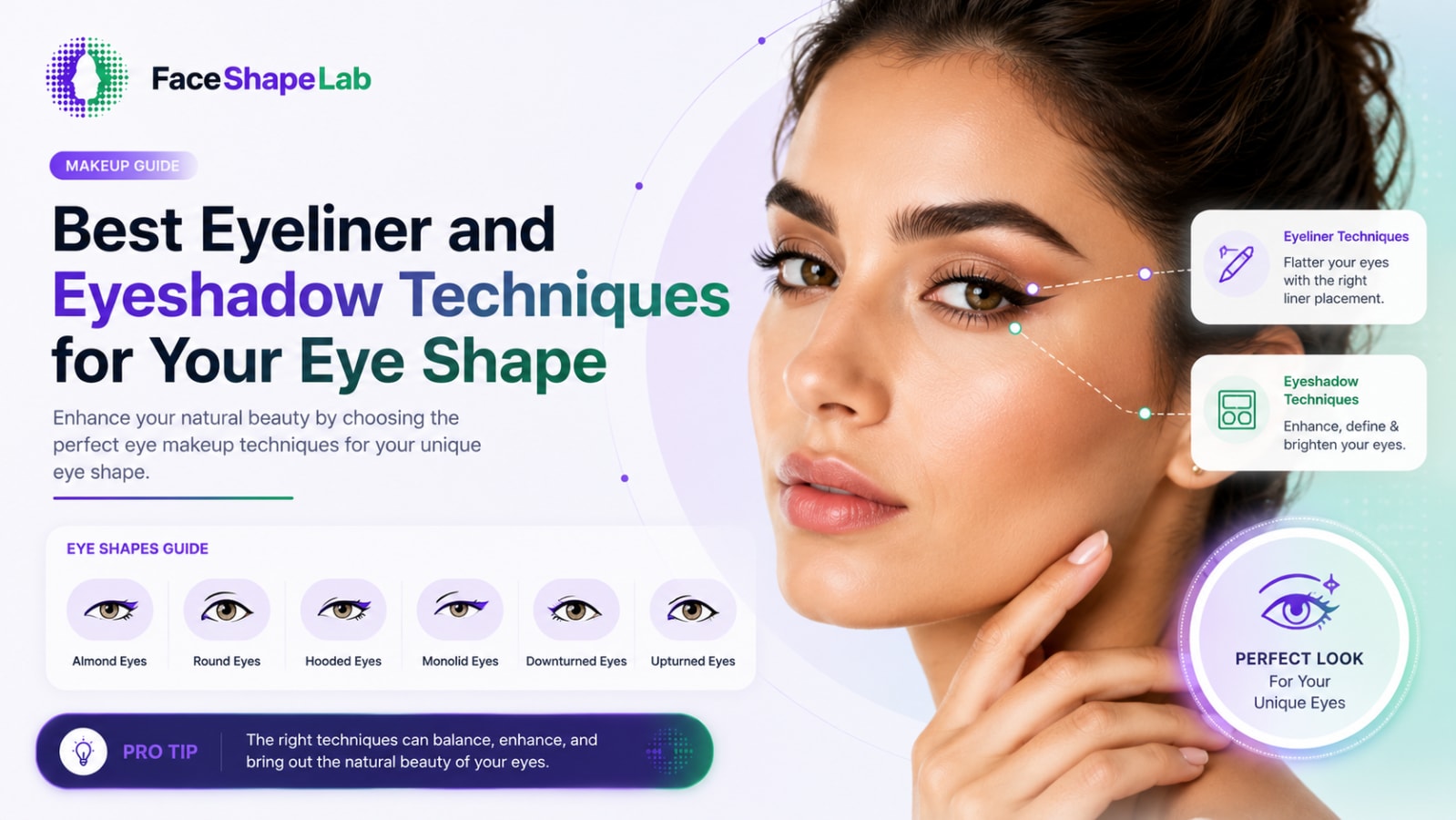
The same winged liner that looks stunning on one person can make another person's eyes look smaller, droopier, or off-balance. It's not a skill problem it's a shape problem. Eyeliner and eyeshadow are essentially optical tools: they can lift, widen, deepen, or elongate the eye depending on where the product sits. Once you know your actual eye shape, every makeup decision gets easier, because you're no longer copying a tutorial you're applying a technique built for your features.
This guide walks through the most common eye shapes, the eyeliner and eyeshadow techniques that work best for each, the mistakes that quietly undo a good look, and how your eye makeup interacts with the rest of your face.
Why Eye Shape Changes Everything About Your Makeup
Eyeliner and eyeshadow don't just decorate the eye they reshape how it's perceived. A thin line versus a thick line, a wing that points up versus one that points out, shadow placed on the lid versus blended into the crease each choice shifts the apparent size, lift, and spacing of the eye.
This is why the same product applied the same way can read completely differently on two people. Someone with hooded eyes needs a technique that keeps eyeliner visible when the eyes are open. Someone with downturned eyes needs a wing that lifts the outer corner rather than dragging it down further. Copying a tutorial without accounting for this is the single biggest reason eye makeup "doesn't work" for so many people, even when the application itself is technically clean.
How to Determine Your Eye Shape First
Before choosing a technique, you need to know which category your eyes fall into. Most eyes are a combination of a few traits:
Lid visibility — is your crease visible when your eyes are open, or does the brow bone hood over it?
Corner direction — do the outer corners point up, down, or sit level with the inner corners?
Spacing — is the space between your eyes roughly one eye-width, closer, or wider?
Overall shape — round, almond, or more elongated?
Eyeballing this in a mirror is unreliable, especially with makeup already on or under different lighting. A faster and more consistent option is running a clear, front-facing photo through an eye shape tool it maps your lid, crease, and corner angles in seconds and tells you exactly which shape category you fall into, so the techniques below are easy to apply directly rather than guessed at.
Eyeliner and Eyeshadow Techniques by Eye Shape
Almond Eyes
Almond eyes are naturally balanced, with visible lid space, a slight upward taper at the outer corner, and iris that touches both the top and bottom lid. This is the most versatile eye shape for makeup, similar to how an oval face shape works with nearly any hairstyle.
Eyeliner: A classic wing works beautifully here. Follow the natural lower lash line upward for the wing angle rather than forcing a steep flick. Eyeshadow: Blend shadow just past the crease and slightly winged at the outer corner to elongate further. Almond eyes can handle bold color placement without looking overdone.
Round Eyes
Round eyes have more visible white space above and below the iris, giving a wide-open, youthful look. The goal with makeup here is usually to elongate rather than emphasize roundness further.
Eyeliner: Extend the line slightly past the outer corner in a thin, straight flick rather than a thick, curved wing curving the line follows the roundness and makes eyes look smaller, not bigger. Eyeshadow: Focus color at the outer corner and blend outward and slightly upward, avoiding heavy shadow directly in the center of the lid, which can emphasize width over length.
Hooded Eyes
Hooded eyes have a brow bone that covers part or all of the crease when eyes are open, meaning eyeshadow placed too high often disappears. This is one of the trickiest shapes to work with, and most makeup mistakes for hooded eyes come from applying techniques designed for visible-crease eyes.
Eyeliner: Apply liner with eyes open, checking visibility in a mirror rather than relying on a closed-eye application. A thinner line at the inner corner that thickens toward the outer corner tends to stay visible longer than a uniform line. Eyeshadow: Place color slightly above where the crease naturally falls when eyes are open, not in the hidden fold. Matte transition shades blended upward help create the illusion of a visible crease.
Monolid Eyes
Monolid eyes have little to no visible crease, with a smooth, flat lid from lash line to brow bone. Rather than trying to create a crease that isn't there, the most flattering techniques work with the flat lid space.
Eyeliner: A thicker, more graphic liner tends to read better on monolids than a thin line, since there's more visible lid space to showcase it. Tightlining along the upper lash line also helps define the eye without disrupting the smooth lid. Eyeshadow: Gradient shading darker at the lash line, gradually lighter toward the brow adds dimension without needing a defined crease. Shimmer placed centrally on the lid also adds visual depth.
Downturned Eyes
Downturned eyes have outer corners that angle slightly lower than the inner corners, which can read as tired even with a full night's sleep. Makeup here focuses almost entirely on lifting the outer corner.
Eyeliner: Angle the wing upward rather than following the natural downward slope of the eye this is the single most important adjustment for this eye shape. A soft, upward-angled smudge along the lower lash line at the outer corner also helps lift. Eyeshadow: Concentrate slightly darker shadow at the outer corner and blend it upward and outward, away from the natural downward pull.
Upturned Eyes
Upturned eyes have outer corners that angle up, giving a naturally lifted, cat-like appearance. These eyes can handle dramatic techniques well, since the shape already has built-in lift.
Eyeliner: A wing that follows the natural upward angle intensifies the cat-eye effect. Thicker liner throughout tends to look striking rather than heavy on this shape. Eyeshadow: Bold color and defined cut creases work especially well here, since the natural lift keeps the look from appearing dragged down.
Close-Set Eyes
Close-set eyes sit closer together than one eye-width apart. Makeup techniques here generally aim to visually widen the space between the eyes.
Eyeliner: Keep liner thinner at the inner corner and progressively thicker toward the outer corner, and skip lining the inner corner entirely to avoid closing the space further. Eyeshadow: Focus color at the outer corners and blend outward, keeping the inner corners bright with a light, shimmery shade to open up the space.
Wide-Set Eyes
Wide-set eyes sit further than one eye-width apart. The goal here is generally the opposite of close-set techniques bringing visual focus inward.
Eyeliner: Line the inner corners fully and keep the wing subtle, so the eye doesn't extend further outward than it already does. Eyeshadow: Deeper shadow at the inner corners, tapering lighter toward the outer corners, helps pull visual attention toward the center of the face.
Eyeshadow Blending Techniques That Work for Any Eye Shape
Regardless of shape, a few blending fundamentals apply across the board:
Use a transition shade first. A matte shade close to your natural skin tone, blended through the crease before adding color, prevents harsh lines later.
Blend in circular motions, not back-and-forth strokes. Circular blending softens edges more evenly than dragging the brush side to side.
Build color in thin layers. It's easier to add more depth than to fix shadow applied too heavily on the first pass.
Set liner with shadow. Patting a matching matte shadow over liquid or pencil liner helps it last longer and softens any harsh edges.
Choosing the Right Eyeliner Formula for Your Eye Shape
The technique matters, but the formula you use can make or break how well it holds up, especially for certain eye shapes.
Liquid liner gives the sharpest, most precise line, which makes it a strong choice for graphic looks on monolids or dramatic wings on upturned eyes. It requires a steadier hand and dries quickly, so mistakes are harder to correct mid-application.
Gel liner offers more blendability than liquid while still holding a defined edge, making it a flexible middle-ground option for almond or round eyes where a softer, smudged line is often more flattering than a razor-sharp one.
Pencil liner is the most forgiving formula and works well for tightlining on hooded eyes, since it can be smudged into the lash line for a soft, defined look without the precision liquid liner demands.
For hooded or oily lids specifically, waterproof or long-wear formulas matter more than shape considerations alone. Liner that transfers onto the crease throughout the day can make even a well-planned technique look smudged by midday, regardless of how well it was applied that morning.
Common Eyeliner Mistakes by Eye Shape
Applying a uniform wing angle to every eye shape. The angle should follow your natural eye shape, not a template copied from a tutorial.
Lining the entire waterline on hooded or downturned eyes. This can make the eye look smaller or more closed rather than more defined.
Ignoring symmetry between the two eyes. Most people have some natural asymmetry, and applying the exact same liner shape to both eyes without adjusting for it often makes one side look slightly different from the other, even with careful application.
Skipping a mirror check with eyes open. Especially for hooded eyes, liner that looks perfect with eyes closed can vanish or look uneven the moment eyes open.
How Eye Makeup Interacts with the Rest of Your Face
Eye makeup doesn't exist in isolation it works in relation to your other features, and a few connections are worth knowing before you settle on a signature look.
Symmetry. Almost everyone's eyes differ slightly in size, shape, or crease depth, which is one reason the same liner technique can look slightly different on each side even when applied carefully. Running a symmetry check can show you exactly where those small differences sit, so you know which eye might need a slightly thicker line or a slightly higher wing to look balanced.
Face shape. Bold, elongating eye looks tend to complement rounder faces, while softer, more blended techniques often suit angular faces that already have strong definition. If you haven't confirmed which category you fall into, an oval, round, or heart shape reading gives useful context for how much drama your eye makeup can carry without overwhelming the rest of your face.
Nose shape. Highlighter and shadow placement near the inner corners of the eyes can subtly affect how the bridge of the nose appears, since the two areas sit so close together. If you contour or highlight around the nose, it's worth understanding your nose's natural proportions so the two techniques work together instead of competing for attention.
Lip shape. A dramatic, defined eye look generally pairs better with a simpler lip, while a bold lip usually calls for softer eye makeup. Knowing your natural lip proportions makes it easier to decide which feature should lead a given look and which should stay more neutral.
Perceived age. Certain eyeliner techniques like a soft, tightlined look versus a heavy, dark wing can shift how old or young a face reads at a glance. If you're curious how a specific style changes that perception, comparing a before-and-after age estimate is a simple way to see the effect objectively rather than guessing.
Expression. Eye makeup placement can also affect how open or approachable an expression looks in photos, particularly around the outer corners. Tools that read facial expression are typically used for other purposes, but they can offer an interesting, objective way to see how a heavier smoky eye versus a soft neutral look changes the emotion your resting face communicates in pictures.
Frequently Asked Questions
How do I know if I have hooded eyes or just monolids?
Hooded eyes have a crease, but the brow bone covers it when your eyes are open, so shadow applied in the crease disappears from view. Monolids have little to no crease at all, even with eyes closed. Checking your lid in a well-lit mirror with eyes fully open is the easiest way to tell them apart.
What's the best eyeliner technique if I have small eyes?
Skip lining the waterline with dark colors, since this closes off the eye visually. Instead, use a white or nude liner on the lower waterline, keep the wing thin, and focus shadow toward the outer corner rather than across the whole lid to create length without adding heaviness.
Can I use the same eyeshadow technique on both eyes if they're slightly different shapes?
Not exactly. Most people have subtle differences between their left and right eye, so applying identical pressure, angle, and product amount to both sides often looks uneven in photos. Small adjustments, like a slightly thicker line or higher wing on one side, usually create a more balanced result than a mirrored, identical application.
Does eye makeup placement really affect how old my face looks?
Yes, to a meaningful degree. Heavy, downward-dragging liner or shadow applied deep into a hooded crease can add years, while lighter, lifted techniques tend to read as more youthful. The effect is subtle but noticeable, especially in close-up photos or video calls.
What eyeshadow colors work best for downturned eyes?
Slightly deeper shades at the outer corner, blended upward and outward, help counteract the natural downward slope. Avoid concentrating dark color at the very outer edge without blending it upward, since that can emphasize the droop rather than lift it.
How often should I re-check my eye shape before trying a new technique?
Eye shape itself doesn't change often, but lid appearance can shift slightly with age, weight changes, or sleep quality, which affects how techniques designed for a "visible crease" or "hooded" look actually perform. If a technique that used to work suddenly isn't translating the way it should, it's worth rechecking your current shape rather than assuming your application skills have changed.
Final Thoughts
There's no single "correct" way to apply eyeliner or eyeshadow — there's only the technique that works with your specific eye shape versus one that works against it. Almond eyes can handle almost any style, hooded eyes need visibility checks with eyes open, downturned eyes benefit from an upward lift, and close-set or wide-set eyes both rely on strategic color placement to balance spacing.
The starting point for all of it is knowing your actual shape rather than guessing from a tutorial designed for someone else's eyes. If you haven't checked yet, a free eye scan takes less than a minute and gives you a clear, data-backed category to build your next makeup look around.