Face Shape and Beard Styles: A Men's Grooming Guide
Not every beard flatters every face. A jawline that looks sharp on one guy can look bulky on another it all comes down to your face shape. Here's how to match your beard style to your features and skip the trial-and-error.
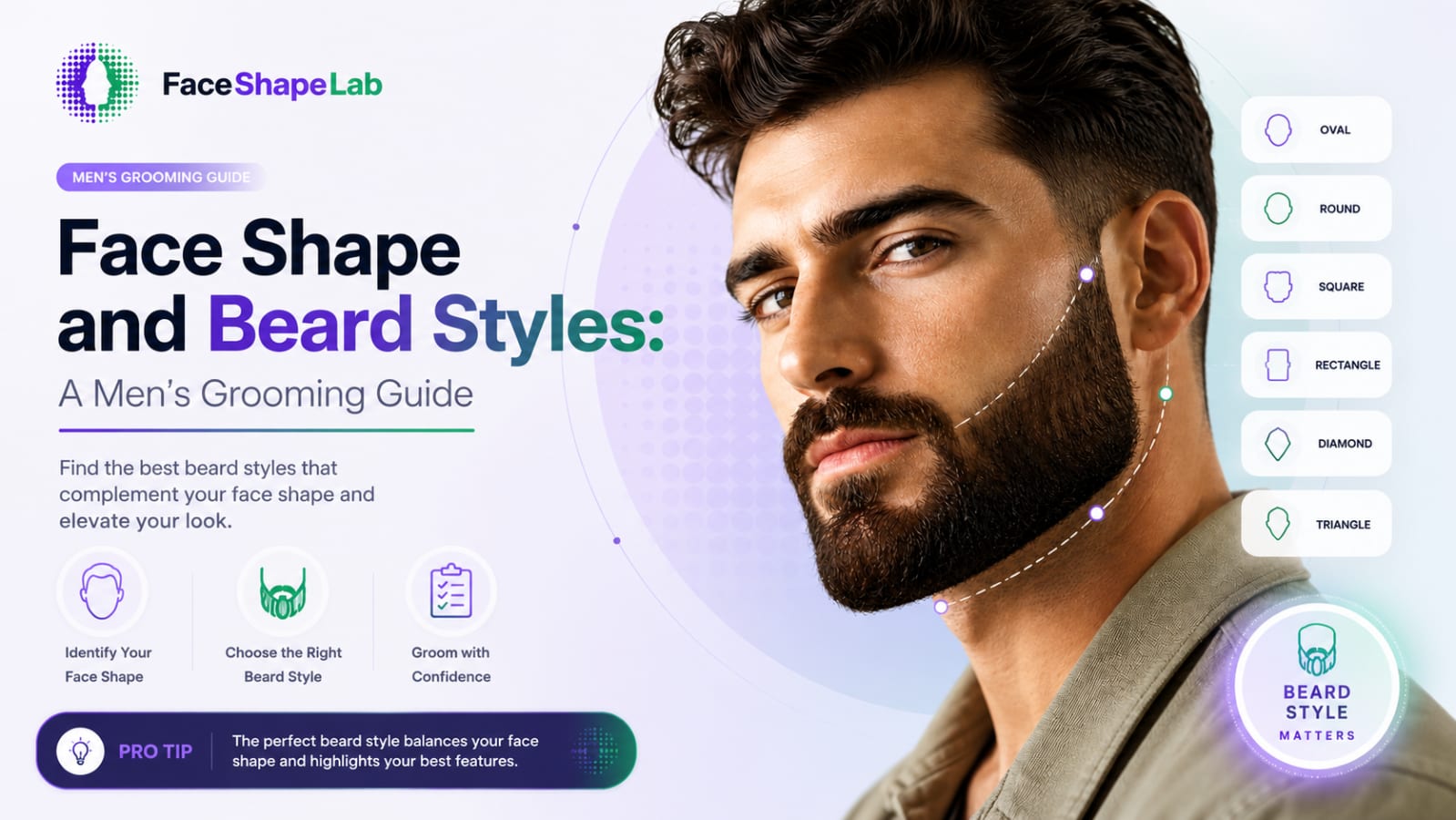
Grow the wrong beard for your face, and even the best trimmer in the world won't save you. Grow the right one, and it can sharpen a soft jawline, balance a wide forehead, or add structure to features that need it. The difference isn't luck it's proportion. Once you know your face shape, choosing a beard style stops being guesswork and becomes a formula.
This guide breaks down which beard styles work with which face shapes, why they work, and how to fine-tune the details from mustache thickness to cheek line height so the end result looks intentional, not accidental.
Why Face Shape Matters More Than Trends
Beard trends come and go, but bone structure doesn't. A beard is essentially a styling tool that adds visual weight, length, or width to your jawline. That means the "best" beard isn't the one trending on social media this month it's the one that corrects or complements the proportions you were born with.
For example:
A narrow chin can look fuller with volume added at the jawline.
A wide jaw can look more balanced with a beard that's kept close on the sides.
A long face can appear shorter with fuller cheek and side growth that adds width.
The fastest way to know which of these applies to you is to actually measure your proportions instead of guessing in the mirror. Scanning your photo with our AI tool maps your jawline, cheekbones, and forehead width in seconds and tells you exactly which category you fall into oval, round, square, heart, diamond, or triangle so the recommendations below are easy to apply directly to your face.
How to Determine Your Face Shape Before Picking a Beard
Before you touch a trimmer, you need a baseline. Three measurements matter most:
Face length — forehead hairline to chin tip.
Jaw width — the widest point of your jawline.
Forehead width — measured across the broadest part of your forehead.
Comparing these ratios by eye is unreliable, especially with facial hair already covering part of the jawline. This is exactly the kind of measurement an AI-based tool handles more consistently than a mirror check, since it maps dozens of facial landmarks rather than relying on a rough visual guess. It's worth doing this before you commit to a style, and again after a few weeks of growth, since a fuller beard can shift how your proportions read.
Best Beard Styles for Each Face Shape
Oval Face
Oval faces are naturally balanced length and width are proportional, with a jaw slightly narrower than the forehead. Almost any beard style works here, which makes it the easiest shape to style for.
Best styles: short boxed beard, classic full beard, stubble. Avoid: anything that adds excessive length, since it can throw off the natural balance you already have.
Round Face
Round faces have similar width and length, soft angles, and fuller cheeks. The goal here is to add length and sharpen the jawline visually.
Best styles: longer beard with tapered sides, goatee with added chin length, Van Dyke. Avoid: full, rounded beards that hug the cheeks they emphasize width you're trying to minimize.
Square Face
Square faces have a strong, angular jawline and roughly equal length and width. The beard's job here is to soften edges, not add more structure.
Best styles: rounded short beard, circle beard, light stubble that softens rather than sharpens. Avoid: heavily boxed or squared-off beard lines, which double down on angles you already have.
Heart-Shaped Face
A heart-shaped face has a wider forehead and a narrower, sometimes pointed chin. The priority is adding volume at the jaw and chin to balance the wider upper face.
Best styles: full beard with extra volume at the chin, rounded goatee. Avoid: very short stubble, which won't add enough width at the bottom to balance a wider forehead.
Diamond Face
Diamond faces are widest at the cheekbones, tapering at both the forehead and jawline. Beards that add width at the jaw and chin help balance the narrower lower face.
Best styles: full beard with fuller sides, chin-strap style with extra volume. Avoid: beards trimmed too close at the jaw, which leave the cheekbones looking disproportionately wide.
Triangle Face
Triangle faces have a jawline that's wider than the forehead. The goal is to add visual volume higher up around the cheeks while keeping the jawline itself cleaner.
Best styles: beard with fuller cheek coverage, styles that draw the eye upward. Avoid: beards that add heavy bulk right at the jaw, which exaggerate the width you're trying to offset.
Beard Styles and Facial Symmetry
Face shape tells you the overall category to style for, but symmetry tells you how to fine-tune the details like whether one side of your jawline needs slightly more fullness than the other, or whether your natural growth pattern is uneven. Most men have some degree of asymmetry, and a beard is one of the easiest ways to visually correct it without anyone noticing you've done anything at all.
If you've never checked, mapping your left and right sides against each other will show you exactly where the imbalance sits left cheek fuller than right, one side of the jaw set slightly forward, and so on. Trimmers who work with barbers professionally often make these micro-adjustments by eye, but knowing the numbers ahead of time means you can direct your own grooming instead of hoping it turns out even.
Grooming Choices That Go Beyond the Jawline
A beard doesn't just interact with your jawline it changes how your whole face reads, including features you might not think to consider.
Nose balance. A fuller mustache or beard can visually shift how prominent your nose looks, especially for stronger or wider nose shapes. If you're unsure how your nose shape interacts with facial hair around the mouth and cheeks, analyzing your nose's proportions first can show you what you're working with before you commit to a heavier mustache style.
Lip visibility. Mustache thickness directly affects how much of your lip shape is visible, which matters more than most men realize — thin lips can disappear under a thick mustache, while fuller lips can look overwhelmed by too much coverage. Seeing your natural lip proportions mapped out makes it easier to decide how much mustache coverage actually flatters your mouth versus hiding it entirely.
Perceived age. A well-groomed beard can add maturity to a younger-looking face or, if left too long and unshaped, add years you didn't ask for. If you're trying to strike a specific balance younger and sharper, or older and more distinguished getting an AI estimate of how old your face reads gives you an objective read on how your current look is landing before and after a style change.
Eye emphasis. A cleaner, well-lined beard naturally draws attention upward toward the eyes and brow. If your eye shape is one of your stronger features, keeping the beard tighter around the cheekbones helps keep the focus there something worth confirming with a quick eye analysis if you're not sure which of your features deserve the most attention.
Common Mistakes Men Make When Choosing a Beard Style
Copying a style from a photo without checking proportions. What works on a square jaw won't automatically work on a round one.
Growing it out fully before shaping. Full growth is useful for assessing patchiness and density, but shaping decisions should be based on your face shape, not just how the hair grows in.
Ignoring neckline placement. A beard that's technically the right shape but has a poorly defined neckline will look unkempt regardless of face shape.
Skipping maintenance trims. Even the best beard-to-face-shape match loses its effect once the lines blur from a few weeks of uneven growth.
Not accounting for hair texture. Curly or coarse facial hair adds visual width faster than straight hair, so the same length can look bulkier depending on your hair type.
Final Thoughts
The right beard style isn't about following what's popular it's about understanding your own proportions and choosing a shape that works with them, not against them. Start with your face shape, since that's the foundation every other decision builds on, then fine-tune based on symmetry, nose, lips, and even how the style affects your perceived age.
If you haven't measured your proportions yet, it takes less than a minute. Upload a clear, front-facing photo here and get a data-backed starting point before your next trim.
Frequently Asked Questions
Which face shape is easiest to grow a beard for?
Oval faces are the easiest to style, since the proportions are already balanced between length and width. Almost any beard length or shape works without needing to correct anything, which is why oval is often called the "universal" face shape for facial hair.
Can a beard actually change the appearance of my face shape?
Yes, to a visible degree. A beard adds volume, length, or width exactly where you grow and shape it, which is why a round face can look more angular with the right jawline definition, or a square face can look softer with rounded edges. It doesn't change your bone structure, but it does change how your face reads at a glance.
What's the ideal beard length for a round face?
Slightly longer facial hair with tapered sides works best for round faces, since it elongates the face and adds definition around the jaw. Keeping the sides close while letting the chin area grow a bit fuller creates the illusion of length that a round face is usually missing.
Does uneven beard growth mean I have facial asymmetry?
Not necessarily. Patchy or uneven growth is often about hair follicle density and direction, not bone structure. That said, if one side of your jaw consistently looks fuller or more forward than the other even with even growth, it's worth checking your underlying symmetry rather than assuming it's just a beard growth issue.
How long should I wait before judging if a beard style works for my face?
Give it four to six weeks of full growth before making a final call. Beards go through an awkward phase where patchiness and uneven length can make even the right style look wrong. Shaping too early, before the hair fills in, is one of the most common reasons a beard "doesn't work" for someone's face.
Should I choose a beard style based on trends or my face shape?
Face shape first, trend second. A trending style photographed on someone with a different jaw width, chin length, or cheekbone structure won't translate the same way to your face. Use trending styles as inspiration for texture and grooming detail, not as a template to copy exactly.
Can facial hair make my nose or lips look different?
Yes, indirectly. A thicker mustache can make a nose appear larger by adding visual weight just beneath it, and heavy mustache coverage can hide lip shape almost entirely. If either of those features is one you'd rather highlight, keeping the mustache area slightly trimmer usually keeps the balance in your favor.